.
Class 4 EVS Chapter 7 How Things Work Question Answer
How Things Work Class 4 EVS Question Answer
Our Wondrous World Class 4 EVS Chapter 7 Question Answer – Class 4 EVS How Things Work Question Answer
Activity 1 (Page 105)
Question 1.
Do you think all objects can spin? Make a list of a few objects that can spin.
Answer:
No, all objects cannot spin. Some objects can spin easily, while others do not spin at all.
Few objects that can spin:
- Coin
- Bottle cap
- Lattu
- Football
- Ceiling fan

Question 2.
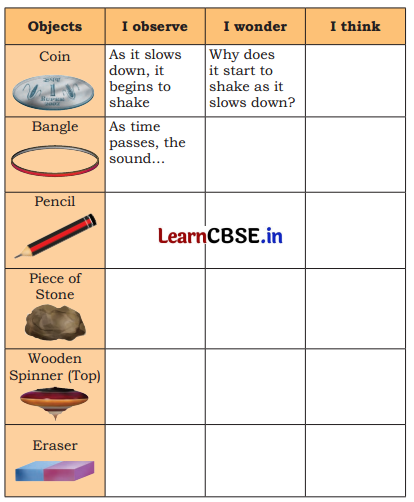
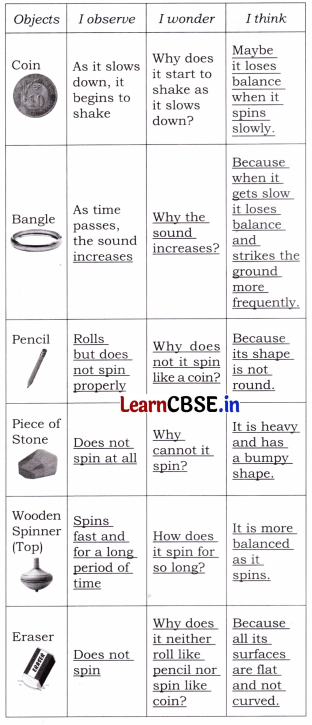
Collect the objects mentioned in the table given below. Spin and observe them. Then, complete the table.
Answer:
Activity 2 (Pages 106 – 107)
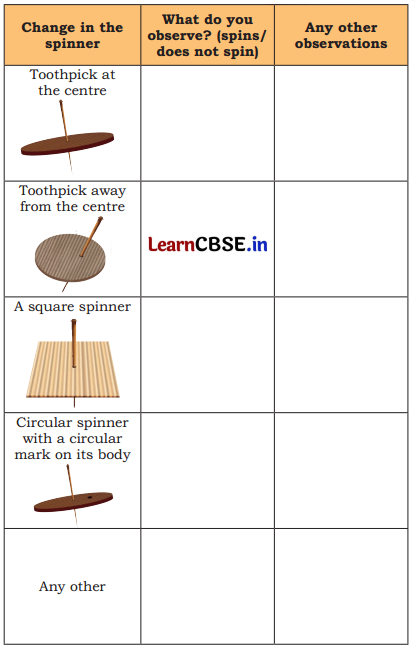
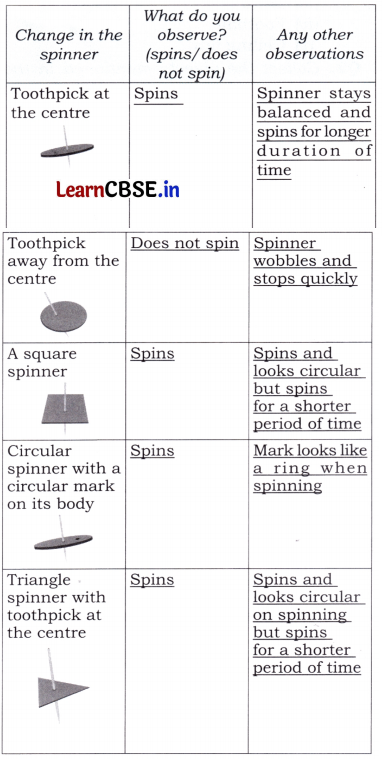
Collect things, such as pieces of cardboard, toothpicks, an empty tube of a ballpoint pen, and other small objects. Make the following spinners. Spin them and record your observations.
Answer:
Discuss (Page 10.8)
Question 1.
Which of the spinners did not spin properly? Discuss the possible reasons.
Answer:
The spinner with the toothpick placed away from the centre did not spin properly. This happened because the spinner was not balanced. If the hole is not in the middle, it wobbles and falls quickly.
Question 2.
Have you noticed the position of the hole in the first two spinners? Did this difference in the position of the hole make a difference in the spinning of these spinners?
Answer:
Yes, I noticed the difference in position of hole in the first two spinners. The first spinner had the hole in the centre, which, made it balanced and allowed it to spun for a longer duration. But the second spinner had the hole away from the centre and it did not spin well. So yes, the hole’s position made a big difference.
Activity 3 (Pages 110-111)
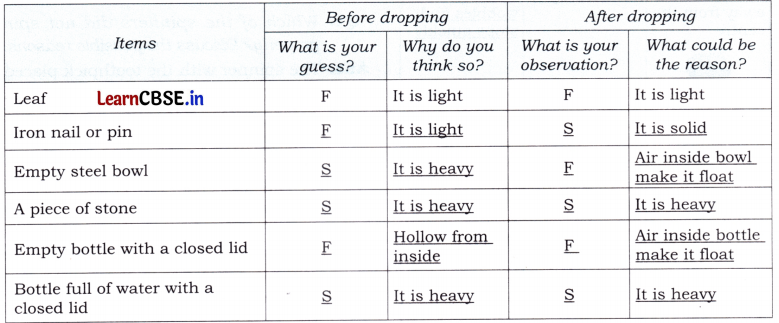
Collect objects, such as a leaf, an iron nail, an empty bowl (katori), a plastic bottle with a lid, pieces of stone, aluminium foil and other things of your choice. Fill a bucket with water. Before dropping the things listed in the table, guess whether things will float or sink. You may try other things too. Then, observe what happens when it is actually dropped in water. You can write ‘F’ for objects that float and ‘S’ for objects that sink.
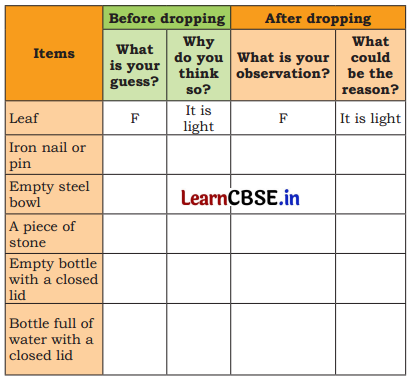
Answer:
Discuss (page III)
Did all the light objects float and all the heavy objects sink? Name the heavy objects that floated and lighter objects that sank.
Answer:
No, all the light objects did not float and all the heavy objects did not sank.
- An empty steel bowl was heavy but it floated.
- An iron nail or pin was light but it sank.
Activity 4 (Page 112)
Let us find out whether shape plays a role in floating and sinking.
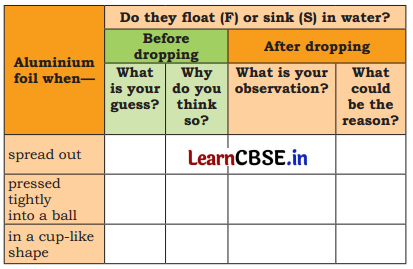
Answer:
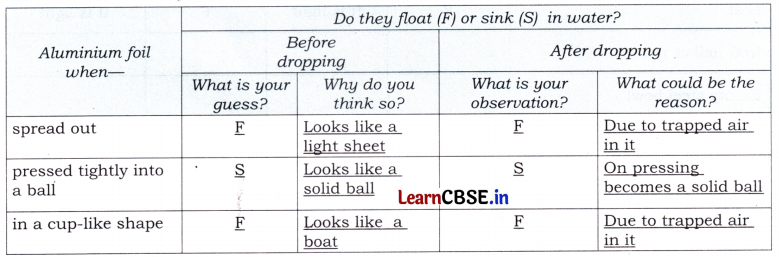
Activity 5 (Pages 113 -114)
Question 1.
Let us create some boats:
- Collect some paper, cardboard boxes, ice-cream sticks, clay, adhesive tape, etc.
- Create groups of three to four students.
- Think of how you can make a boat using some of the materials that you have.
- Draw a picture.
- Prepare a boat. Try to ensure that your boat is different from boats made by other groups.
- Organise an exhibition of boats in the class.
Following are some different types of boats which can be made.
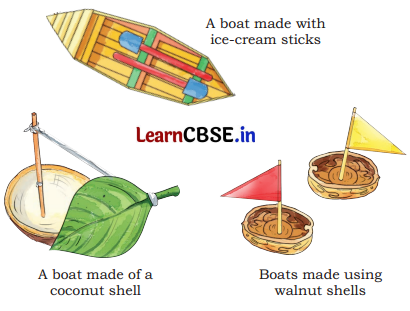
Do it yourself with the help of your teacher and other students in the group.
Question 2.
Compare your boat with others boats.
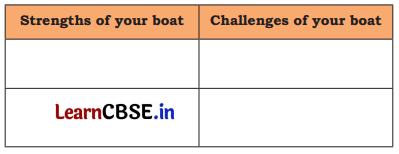
Answer:
Do it yourself
Let Us Reflect (Pages 115-116)
1. Enquire about something
When Ravi spins a spinner, he notices that it slows down and eventually stops. He is curious about this and asks his teacher some questions. List at least two questions that he could ask.
Question 1
Why does the spinner slows down after sometime?
Question 2
What makes the spinner stop spinning?
2. Figure It out
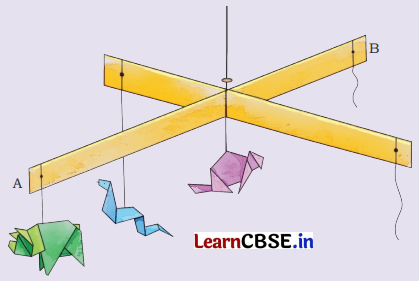
(a) The following figure is bending towards the side ‘A’. What should be done to balance it?
(b) How would you make a floating object sink and a sinking object float?
Answer:
(a) To balance it, we can either add weight to side B or remove the object from side A or move ‘the weight towards the centre.
(b)
- To make a floating object sink, add some weight to it or try to change the shape of the object if possible.
- To make a sinking object float, attach something light, like a sponge or try to change the shape of an object if possible.
Do an activity
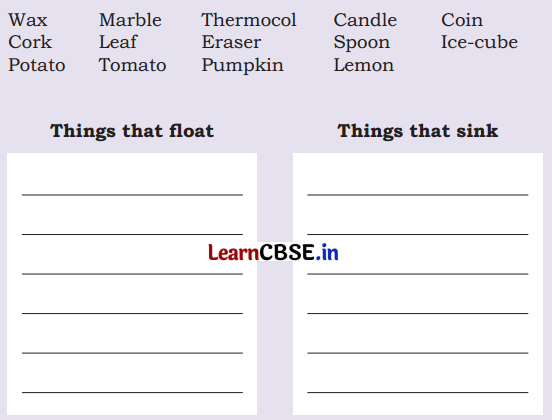
Classify the objects below based on whether they float or sink in water.
Answer:
| Things that float | Things that sink |
| Wax | Tomato |
| Cork | Potato |
| Leaf | Marble |
| Thermocol | Eraser |
| Ice-cube | Spoon |
| Pumpkin | Coin |
| Candle | Lemon |